Showing posts with label All about diamonds. Show all posts

Wednesday, February 20, 2008

Beware of the Diamond Scams


High quality man made diamonds are a bargain at about $80 per carat, and they do not increase in price exponentially as carat weight increases. For example, a one-carat synthetic diamond costs about $80; a three-carat man made diamond would then sell for $240. A one-carat mined diamond that sells for $3000 would go for $45,000 in a three-carat size, all things being equal, which with mined diamonds is never the case. Perplexing comparative evaluations, exponential price growth, consumer confusion, and the reality of diamond industry antics is why the mined diamond business is awash in dirty tricks. Here are descriptions of the most sneaky and pervasive mined diamond scams:

THE BLUE-WHITE SCAM: A jeweler tells you, "This is a blue-white diamond." This is a very old term. The dealer will probably tell you that it is a better diamond, but actually it is just the opposite. Blue-white refers to the fluorescence that results in natural light, which contains ultraviolet wavelengths. This blue fluorescence actually makes a colorless diamond look a little oily or milky in sunlight and decreases its value.

THE LIGHT MAKES WHITE SCAM: Bright lights make every mined diamond look better. Of course, every jeweler wants to show his or her diamonds in the best light, but there are some lighting tricks you should avoid. Some bulbs have a strong blue component, which makes yellow stones look whiter. Special bulbs are often used with strong ultraviolet wavelengths, which make most diamonds fluoresce blue. This also has a whitening effect for stones in the lower color ranges.

THE GRADE BUMPING SCAM: A jeweler exaggerates the grade. The FTC says that a jeweler must be accurate within one grade of color and one grade of clarity on a diamond. So many jewelers bump the color and clarity just one grade. Unfortunately, this can mean a great deal of money if you are talking about a fine-quality, 1-carat diamond. For instance, you might find a stone that the jeweler quotes as a 1.00 carat F color / VS1 clarity for $6,500. However, if you sent it to a reputable gem lab like GIA, it would come back as a G color / VS2 clarity, which is only worth about $5,500. This means you lose (and they profit) about $1,000.

THE FRACTION SCAM: The tag says 3/4 carat, and the FTC allows jewelers to round off diamond weights. So a diamond labeled as 3/4 carat in weight might actually weigh anywhere between .69 and .81 carat. This could mean a significant amount of money, since diamond prices leap at certain popular sizes. In this example, you might be buying a .69 carat round G/VS2 worth about $2,100... but paying for what you thought was a 0.75 carat worth $3,000. You lose $900.

THE LASER DRILLING SCAM: Dealers drill holes to burn out black carbon spots. About 1 in 3 diamonds in the United States is laser drilled. Dealers use lasers to drill a tiny hole into the depths of a diamond to burn and evaporate large black inclusions to make them disappear. The trouble with this little trick is that laser drilling can make the diamond a little more fragile to breaking with a good knock. Most dealers trade laser-drilled stones for much less.

THE HIDING THE FLAWS SCAM: Every jeweler hides flaws under the prongs if he can. In many cases, this can make an I1 clarity appear like a VS2 if you look at it in a ring setting. Structural flaws like feathers and cleavages can be damaged by the high pressure exerted by the prong on the diamond to hold it snug in the ring.

THE FRACTURE FILLING SCAM: New treatments to make flaws invisible. There is a new process patented a few years ago that melts a kind of crystal into surface-breaking fractures in a diamond. This technique will slide by consumers unnoticed. The treatment is considered slightly fragile because it can be damaging under the extreme heat of a torch when the diamond is set into a ring. Fracture-filled diamonds should trade for much less than diamonds without this treatment, but in reality they often sell for as much or more because they look like a higher, more expensive clarity grade.

THE CHEMICAL COLOR COATINGS SCAM: A little paint goes a long way. This very deceptive practice involves a little point of blue or purple paint on the lowest tip of the diamond, called the culet. This is small enough that you might not detect it, but the location spreads the color throughout the stone. This counters the yellow tint in lower color grades, making a diamond look like a more expensive, colorless grade.

Man made diamonds or synthetic diamonds are manufactured in a laboratory under controlled conditions. If anything about synthetic diamonds is called into question it is that they are too perfect. And since all mined diamonds have inclusions, flaws, and birthmarks, under magnification a trained jeweler can tell the difference. Considering that man made diamonds cannot be distinguished with the naked eye, lab-created diamonds have aesthetic beauty matching—often besting—mined diamonds, and huge savings are realized, jewelry lovers must regard synthetic diamonds as an intelligent option. Plus, there is no insurance to buy after purchasing man made diamond jewelry and the thousands of dollars in savings can be banked!

Saturday, February 2, 2008

Know the 4 C's of the Diamond That You Want to Buy


When selecting a piece of diamond jewelry, be it an earring set, a nice pendant or a diamond ring, it is important to have an understanding of the 4 C’s. Some of you may not know what are the four C’s and what in the world do they actually mean? 4 C's stand for the clarity, cut, color and carat weight of a diamond. And when you're choosing a diamond, it is the smart thing to do to choose it base on these 4 factors. So, here I'd like to give you a simple explanation about it:

  1. The Clarity of a Diamond. Out of the four C’s this is probably the most difficult for an ordinary person to distinguish when looking at a diamond earring, but is possibly the most important. The clarity determines how brilliant or dull the diamond will be depending on how much light can reflect without the disturbances of flaws (also known as inclusions). There are 12 different symbols that are used to describe the clarity of a diamond. An “F” denotes that the diamond is flawless while at the other end of the spectrum, an I3 explains that a diamond has obvious flaws that are easily seen with the naked eye. The ten grades in between these two describe how easily flaws can be seen and with what type of magnification.

  2. The Carat Weight of a Diamond. While usually thought to explain size, the carat weight of a diamond actually is a measurement of the weight of diamond. One carat is equal to 0.2 grams or 0.007 of an ounce. It is therefore, not a measure of quality but a measure of quantity. The larger the diamond, the more valuable since larger diamonds are more rare than smaller ones. It is also important to remember that just because one diamond maybe double the weight of another diamond doesn’t mean that the diamond earring will double in price. The price of diamonds rises exponentially.

  3. The Cut of a Diamond. The term “cut” for a diamond has two different connotations. The more basic of the two, is the shape of the diamond. Diamonds come in various shapes such as the round, oval, emerald, pear, heart, and marquis. While these cuts are easy to distinguish and to choose from, the more difficult “cut” to decipher is the different angles, proportions, symmetry, finish and polish of the diamond earring. This plays a large part in the beauty of the diamond and how well it will reflect light. If it is a “shallow cut” light will be lost from the bottom while if it is a “heavy cut” light will be lost from the sides. The goal is to get a “fine cut” where no light is lost. The quality of the cut depends on the jeweler. A diamond is usually cut with 58 different facets. If the cuts are mathematically correct and precise, then the diamond earring will be able to reflect light with brilliance.

  4. The Color of a Diamond. The color of the diamond helps determine the value of a diamond whether it is completely without color or is tinted yellow. There is a scale from D-Z that grades the color of the diamond. The letter D is used for diamonds that are completely clear. Before assuming that the farther along the scale you go less valuable the diamond is, think again. Within the scale there are canary yellow, blue, pink, and red diamonds that are considered to be very precious. For example, the rare and valuable Hope Diamond is not clear but blue.

Each of the 4 C’s plays a large part in the value of a diamond all must be taken into account when purchasing your diamond jewelry. Remember, buying a diamond is like an investment. They'll last forever and will be forever valuable. Therefore, it is crucial to pick the best among the best, don't you think?

Monday, January 28, 2008

6 Helpful Tips on How to Buy a Diamond


  1. Learn about diamonds
    Sometimes, I just can’t help myself but to keep on emphasizing this to anyone who wants to buy a diamond online: LEARN SOMETHING ABOUT DIAMONDS! Pardon me, I don’t mean to shout. But the fact that many people are very ignorant about diamond yet want to buy them through the internet is driving me crazy.

    Believe it a not, there are jewelers who are unable to differentiate a diamond cut from a diamond shape. Everyone is so hyped up about the carat weight and has totally forgotten about the other 3 characteristics of a diamond.

    It won’t take you years or months to learn something about diamond. There are plenty of articles and information on the 4C of a diamond. Spend some useful time in the library or internet and learn about diamonds. Who knows, you may become an expert in diamonds.

  2. Prioritize the 4 characteristics
    There are much more about diamonds than just the 4Cs. But at the end of the day, the 4Cs are still the major factors influencing the quality and price of a diamond.

    Before you start prioritizing the 4Cs, you got to know what your girl actually likes about a diamond. If she like big one, go for a diamond with big carat weight but with poorer quality in terms of color, cut or clarity. If she likes the brilliance of a diamond and doesn’t mind the size, choose one with excellent cut and clarity. Whichever the case is, prioritizing the 4Cs will give you a better idea of what diamonds will suit her taste as well as your budget.

  3. Do a price research
    With your list, do some price research at some of the online jewelry stores. Based on your list, you should have a rough estimate of the market price of the diamond you are looking for. If the price is out of your budget, try going for a grade lower than your expectation and you may eventually find one that suits you well.

  4. Do some background research on the jewelry stores
    If you have been doing researching, you would have come across information on cubic zirconium diamonds. These synthetic diamonds are D-color graded, flawless and cut to perfection. In short, a CZ diamond is a ‘perfect’ diamond. It is brilliant, flawless and yet cheap. Their prices do not increase exponentially with their quality unlike diamonds.

    And there are also some natural diamonds which have undergone treatments to reduce its blemishes thus enhanced its appearance. It is still a low grade diamond and dishonest dealers may try to pass it off as a good graded diamond and sell you at a higher price.

    So, before you start swiping your hard-earned money away, do some research about the jeweler as well. Ask your family, relatives or friend who have purchased from the dealer. Online forum is a good place to ask around and there are plenty of sites that provide reviews on jewelry store online.

    Give the jewelry store a call, talk to their staffs and decide for ourself if you are comfortable with the store.

  5. Always ask for a money back guarantee
    There are risks in very form of transactions, so do buying diamonds. Protect yourself and minimize any risks by making sure that the store has the complete details about their return policy. It should include information about the validity period, what to do if you wish to return your purchase and their address.

    As a rule of thumb, online stores should offer you no less than 21 days return policy. In fact, most of them have a return policy of 30 days.

  6. Choose jewelers who provide grading reports
    Certified diamonds will come along with a grading report by reputable gemology organizations such as GIA or AGS. Some online jewelry stores certified their diamond by in-house gemologists and they may be using different grading standards from GIA or AGS, while others may not provide the grading reports. Diamonds from top online jewelry stores generally comes accompanied with a grading report.

    After you have purchased your diamond, you should get it appraised again with the grading report by a trained gemologist. The grading report will be very helpful in ascertaining whether the diamond you have bought is up to the specifications shown on the report.

Wednesday, January 16, 2008

Man Made Diamonds: The More Affordable Ones


Diamonds may be a woman’s best friend, but modern man made diamonds are so good as to be indistinguishable from real diamonds. And when you look at the huge savings on price, man made diamonds may be a woman’s best decision.

Increasingly, engaged couples are considering the cost of some wedding jewelry. In today’s high pressure high cost lifestyle couples are really wondering whether or not it is appropriate to spend big on, say, a diamond engagement ring.

The more spent on wedding jewelry the less available later for the important things in the marriage, like a house. Or the kids when they arrive. Is it responsible to spend so much to buy a diamond engagement ring when these more important things may need to be compromised later?

Especially when you consider that good quality man made diamonds cannot be distinguished from real diamonds, even by jewelers.

Faux diamonds are big business. The pearl jewelry industry was revolutionized by the advent of cultured pearls. Synthetic diamonds are doing the same thing to the wedding jewelry business.

There is a range of ways to produce synthetic diamonds. Modern technology is very adept at making any product which will sell well and faux diamonds are no exception. And the quality is so good that many of the alternatives to diamonds perform exceedingly well when compared to diamond using the common diamond quality tests.

In such tests as hardness, refractive index, fire, brilliance, luster and others the man made diamonds perform admirably; sometimes even better.

Brilliance is a test of the amount of light which enters the stone and gets reflected back. It is affected by the quality of the cut of the stone.

Fire is the ability of the stone to break light down into it’s component colors and is also affected by the cut. “Fire” can be seen as color coming out of the stone.

Luster is the amount of light reflected back from the surface of the stone.

Moissanite, for example, outperforms diamond in brilliance, fire and luster and is only very slightly lower on the hardness scale. In fact a special piece of testing equipment had to be designed so that jewelers could tell moissanite from diamond as so many were unable to.

And, of course, moissanite is much cheaper than diamonds. And if most jewellers cannot tell it apart from diamonds, could you?

There are a range of different processes used to produce a stone which is a good diamond alternative. Most produce fine quality stones which produce stunning quality jewelry which any woman would be proud to wear.

Moissanite is not strictly a man made diamond though, as it is, in fact, naturally occurring. Unfortunately it doesn’t occur in sufficient quantities to be commercially viable for mining. But technology has come to the rescue by devising a method of producing high quality crystals.

Our preference for the best alternative to diamonds? Moissanite. A fine jewelry stone which will make a stunning engagement ring, or other jewelry piece. And you can buy moissanite wedding jewelry at a fraction of the price of diamond wedding jewelry.

And when the kids come along, buy them something extra from us from the money you’ve saved.

Sunday, December 16, 2007

How Diamond Prices Are Set?


Pricing most products is quite easy. Determine how much it costs to make the item, how much it costs to market that item, and then mark it up by 15 – 30% or more. Simple, right? Well, pricing diamonds isn’t quite that simple. There are many factors that are considered when diamonds are priced.

Diamond prices are determined first by adding the cost of the rough diamond, the cost of cutting the diamond, and all other costs necessary to turn the rough diamond into a marketable diamond. Depending on the importance of the diamond, an independent company may be called in to certify the grade of the diamond based on color, cut, clarity, and weight.

At this point, the diamond becomes more expensive each time it changes hands, until it finally reaches a retailer, where the price is raised a bit more. Before reaching the retailer, however, the diamond must travel from the mine, to the cutter and polisher, to the independent grading company, and then to the Primary market. Once it has reached the primary market, it will be purchased by diamond dealers and wholesalers, and from there it will be sold to retailers.

As you can see, the earlier you can purchase a diamond in the process, the lower the cost of the diamond will be – but not the value. The value is based on what the diamond will sell for in the market place – through a retailer.

If you own a diamond, and you have no idea how much it is worth, you can have it appraised, but the appraisal may not be accurate. You will be better off obtaining a certificate through GIA – Gemological Institute of America. With the information on this certificate, you can use a cutter’s guide to accurately determine what your diamond is worth.

There are also many diamond price calculators available. These can be found on the Internet, and many diamond dealers use these as well. You must realize, however, that before you can accurately price a diamond, without a Diamond Grade Report, you need to know quite a bit about diamonds, such as different cuts, clarity, color, and weight – and how each of those aspects adds to the value of a diamond, or decreases the value of the diamond as the case may be.

Again, you will be better off if you get a Diamond Grading Report on the diamond, and use that information to look up the price in one of the guides that the diamond cutting industry uses. This will give you the most accurate value of the diamond in your possession, or of the diamond you are considering purchasing.

Friday, December 14, 2007

Buying a Diamond Engagement Ring


There is much to consider when purchasing a diamond – especially diamond engagement rings! Do you know that the tradition of presenting a woman with a diamond engagement ring when proposing began in 1477? It was when Archduke Maximilian presented a diamond ring to Mary of Burgundy – and in most cases, the woman you plan to propose to will expect a ring to accompany that proposal!

First, determine how much ring you can afford. Most people use the ‘two months salary’ rule. This means that the ring should cost the equivalent of two months of your current salary. Because you have other bills to pay, saving up this amount of money may take quite a bit of time. You should consider financing. Simply go to the jeweler of your choice and tell them that you plan to buy an engagement ring, and that financing will be necessary. Go ahead and get the credit check out of the way, find out what your payments will be, and how much of a down payment is required.

Now, have your mother, sister, or your girlfriends best friend take your girlfriend shopping, and make sure that they gaze at the engagement rings to get an idea of what she might like. Make sure that the jewelry store you buy the ring from will allow you to return the ring, if that is required, or allow your girlfriend to exchange it for another if she isn’t happy with it!

Tuesday, December 11, 2007

How to Select a Good Diamond for Yourself


Diamonds are graded for certification by laboratories using grading criteria. Four of these criteria are critical to understand when making a diamond purchase or investment. Known as the “Four C’s” these criteria are: color, cut, clarity and carat.

Color is the result of the composition of a diamond and it does not change. When a jeweler is describing the color of a diamond they are referring to the presence or absence of color in white diamonds. Because a diamond with no color allows maximum light to pass through, colorless diamonds are preferred for their sparkle.

Cut refers to a diamonds reflective quality. Most diamonds are cut with 58 facets. The brilliance of diamonds is heavily dependent on the cut. The different angles and the finish of a diamond determine its ability to reflect light and cause its brilliance and fire. Remember that the cut of a diamond can have an impact on its durability as well as its beauty. Some cutting faults can make a diamond prone to breakage. A diamond that is cut too thin can also cause light to leak out of the back and the diamond will lose some of the sparkle and appear not to shine. So, as you can see the Cut is probably the most important of the Four C’s.

During the formation process, inner flaws, or inclusions occur in most diamonds. The number and size of these inclusions determine what is referred to as the clarity of a diamond. Diamonds that are clear create more brilliance and therefore are rarer and highly priced. To be considered“flawless”, a diamond must have no surface or internal imperfections visible upon being viewed by a skilled diamond grader using 10 power magnifications.

Carat is the unit of weight by which diamonds are measured. One carat is equal to 200 milligrams. A carat is divided into 100 segments called points. 150 points would equal one and a half carats.

When you go to the store to make that all important diamond purchase, do not be shy! Ask questions, get the answers needed to make an informed purchase. Shopping for certified diamonds enables you to make an informed selection. Knowing the “four C’s” allows you to comparison shop and purchase the best diamond at a fair price. But, before making a purchase, shop around and decide what shapes and styles really appeal to you. Enjoy your diamond for years to come!

Sunday, December 9, 2007

Diamond Grading Reports Crash Course


As I mentioned in my previous post, having a certificate or a diamond grading report is very important, and for your own good, you want to get one. Unfortunately, you probably won’t understand a word of what is on that diamond grading report, unless you are in fact, a jeweler.

On the color grading scale, D, E, and F mean that the diamond has no color. G, H, and I means that it has very little color. J, K, and L means that the diamond has a slight yellow color. P, Q, R, S, T, U, V, W, and X means that the diamond is a darker shade of yellow. Z means that the diamond has a fancy color which by all means, other than white or yellow. On the color grading scale, D would be the most valuable, and X is the least valuable one. However a diamond that gets a Z rating would be the rarest and most expensive diamond in the world.

There are many aspects to a grading report. Figuring it all out can be very confusing. The best way is to talk to a jeweler you trust, and have them explain everything on the diamond grading report to you.

How Do You Insure Your Diamond?


Insuring a diamond takes a bit of thought, planning, and shopping around. Diamond insurance isn’t like purchasing car insurance. It is quite different. Depending on the state that you live in, there are basically three different types of policies that will cover diamonds, and all insurance policies that cover diamonds are considered Marine type policies.

The first type of insurance policies for diamonds is an Actual Cash Value policy. If the diamond is lost or damaged beyond repair, the insurance company will replace the diamond at today’s market value, no matter how much you paid for the diamond to begin with. This type of insurance policy for diamonds actually is not that common.

The most common type of insurance for diamonds is Replacement Value insurance. The insurance company will only pay up to a fixed amount to replace the diamond that was lost or damaged beyond repair. This does not mean that they will pay that amount – it means that they will pay up to that amount. In most cases, the diamond can be replaced at a lower cost.

The third type of coverage offered for diamonds is Agreed Value. This is sometimes called ‘Valued At.’ This type of coverage is very rare. In the event that the diamond is lost or damaged beyond repair, the insurance company simply pays you the amount that you and the company agreed upon. This is the best type of insurance to have, but it is rarely offered. If you can’t get Agreed Value coverage, Actual Cash Valuecoverage should be your next choice.

Your rates will be determined by the value of the diamond, the type of coverage that youselect, and the area that you live in. If you live in an area with a high crime rate, you can expect to pay more for your diamond insurance coverage. It is important to remember that insurance agents are not qualified jewelers, and jewelers are not qualified insurance agents. It is best to get a certificate for your diamond, and to provide the insurance company with a copy of that certificate. This leaves the insurance company less room for arguments over the actual value of the diamond.

Don’t rely on separate coverage to cover your diamond. For instance, if you diamond is stolen from your home, it is probably covered on your home owner’s insurance policy. However, the diamond probably won’t always be in your home, and once it leaves your home, there is no coverage.

The History of Synthetic Diamonds


The first synthetic diamonds were produced by General Electric in 1954. A synthetic diamond is basically a rock that has the durability, refractive index and hardness of a natural diamond – but it is made by man. A synthetic diamond should not be confused with stimulant diamonds, such as glass, cubic zirconia, or moissanite.

Although the technology for synthetic diamonds came into play in 1954, no synthetic diamonds were ever seen on the market until the 1990’s. This was due to the fact that it took many years for General Electric to produce a synthetic diamond that could compare with the quality of a natural diamond – and when they figured out how to do it, they found that it cost more to produce a synthetic diamond than it did to mine and cut natural diamonds.

Finally, a small company by the name of Gemesis Corporation figured out a way to produce synthetic diamonds that were of the same quality as natural diamonds, at a cheaper price. Today, Gemesis produces synthetic white diamonds, and colored diamonds as well. These diamonds sell for about 1/3 of the cost of a natural diamond, but there is a shortage of them, and they are hard to find. In fact, it seems that synthetic diamonds are rarer than natural diamonds!

Saturday, December 8, 2007

What is a Diamond Certificate?


A diamond certificate is also known as a Diamond Grading Report. This report comes from the Gemological Institute of America (GIA), and you should require this report when you are purchasing a diamond.

With a diamond certificate, you can verify the color, cut, carat, weight, and clarity of the diamond. You don’t have to worry about a diamond dealer telling you anything less than the truth, because the certificate comes from the GIA – not the dealer. You may be required to pay for the certificate, but the cost is usually low, and in many cases, it will help you negotiate a better price on the diamond or keep you from purchasing a lower quality diamond altogether.

If you buy a high quality diamond, and then later decide to sell the diamond, you will need to have the certificate. Without it you will have a hard time selling it to someone else. Plus, you can use the Diamond Grading Report to look up the wholesale value of the diamond in question. Use the guide that is used by the diamond cutting industry.

I must remind you that you should give a copy of the Diamond Grading Report to your insurance company should you want to insure the diamond. This provides absolute, unquestionable proof of the value of the diamond should it be stolen in the future. Insurance companies cannot argue with the report.

Avoid diamond dealers who seem reluctant to provide a certificate! Also avoid sellers who tell you that a certificate diamond will cost you more – the only additional cost should be the cost of the certificate, which is low. If the dealer doesn’t want to provide a certificate, then you don’t want to do business with that dealer.

Don’t accept certificates from Gemological Laboratories other than the GIA. There are many fly-by-night Gemological labs these days, but in the end, GIA has been established as the most respectable and trustworthy and not to mention oldest among the lot. So avoid dealers who don’t want to use GIA for certification purposes as well.

What does Diamond Brands Means?


Diamonds are one of the few products that simply cannot be ‘branded.’ Even though there are different cuts, different grades, and different values placed on each and every diamond in existence, no diamond is any specific brand – just as gold is not a specific brand.

DeBeers Diamond

Branding is actually based on who owns the diamond. For instance, if DeBeers owns the diamond, it is a DeBeers Diamond – but it is still just a diamond. If the diamond was cut by a specific well known cutter, then it might be branded in that way as well – but it usually isn’t. It is still branded based on who owns it at the time. So basically, when it comes down to it – diamond brands mean absolutely nothing at all.

Do not allow a jeweler to try to talk you into paying an exorbitant price on a diamond because it is a specific brand. This is a bit of trickery used by unscrupulous jewelers when they know that they are dealing with people who don’t know much about diamonds. Remember that diamonds are not actually branded – unless mother nature has her own brand!

Monday, December 3, 2007

Choosing the Right Cut For You


There are many different cuts of diamonds to choose from. The cut essentially refers to the shape that the diamond is cut into, and other than just shapes, it also has a great impact on how much the diamond sparkles.

Marquise Cut Diamond

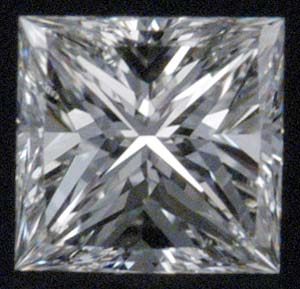
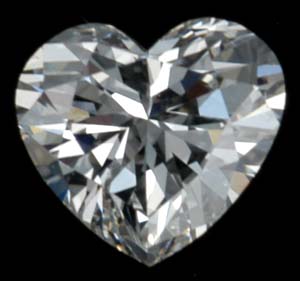
The most popular cuts are heart, marquise, oval, pear, princess, round, trillion, and emerald cuts. A diamond shape, like I mentioned before has an impact on how much the diamond sparkles. Not to mention that the process of cutting the diamond itself into a particular shape matters a great deal. If the diamond is poorly cut, it will lose its sparkle.

However, in the diamond industry, the cut of a diamond doesn’t refer to its shape at all. Instead, this is a reference to the stone’s depth, width, brilliance, durability, clarity, and other aspects of the diamond. Common cutting problems include a missing or off center culet, misalignment, a diamond that is too thick or too thin, cracks, or broken culets.

Princess Cut Diamond

When shopping for a diamond, you should of course choose the shape that you like the best, but then look at several different diamonds of that shape to find the one with the best cut – the one that sparkles the most, in all types of lighting.

Sunday, December 2, 2007

Beware of the Diamond Scams


When it comes to diamonds, there are numerous scams to avoid. Most scams are minor, but there are some major ones that come up from time to time concerning the buying and selling of diamonds. Scams occur simply because most people who buy diamonds – for whatever reasons – don’t know that much about diamonds. Therefore, they are easily fooled.

A common scam that most jewelry stores participate in is the Carat Total Weight scam. The tag on the piece of jewelry, usually a ring, only states the total carat weight of all diamonds in the piece, instead of listing the total weights separately for each diamond. This leads consumers to believe that the main diamond in the piece is actually bigger than it is. Ask what the total carat weight of the center stone is. Also beware of fractions. Jewelry stores are allowed to round off diamond weights. This means that if the jeweler tells you that it is a ¾ carat diamond, it is probably between ½ and ¾ carat – but closer to ¾.

Jewelry stores often run ‘fluorescence’ scams to varying degrees. Referring to a diamond as a blue-white diamond is such a scam. A blue-white diamond sounds very unique and special, but in fact, this type of diamond is of lesser quality – even though the jeweler will try to make you think you are getting something special. Jewelry stores also like to show their diamonds in bright lights. Lights make diamonds shine. Ask to see the diamond in a different, darker type of lighting as well.

Some truly unscrupulous jewelers target those who want appraisals on diamonds that were given to them as gifts or that were purchased elsewhere. They will try to tell you that the diamond is worthless, or worth less than it actually is worth – and offer to take it off your hands or trade it for a much better diamond, along with the cash to make up the difference. This is called low balling. Get a second, third, and even a forth opinion before taking any action.

Another common dirty trick is to switch the diamond you have chosen and paid for with one of lesser quality and value when you leave it to be set in a piece of jewelry, or leave a diamond ring to be sized. The only way to avoid this is to do business with one trustworthy jeweler. Avoid jewelers that you have not done business with in the past.

There are many more scams that jewelry stores commonly pull on unsuspecting consumers. Just use your best judgment, and purchase your diamonds with the utmost care and consideration.

Saturday, December 1, 2007

Diamond Cuts


Diamonds that we see in the jewelry stores are diamonds that has been carefully cut. Often times, we see diamonds being labeled with it cut design names such as princess cut, marquise cut or heart shape cut. Some of us may not know how does these cuts look like, and believe me, there are a lot of cuts out there. But here are the most common ones:
Round cut


Princess cut


Emerald cut


Cushion cut


Asscher cut


Heart shape cut


Marquise cut


Oval cut


Pear cut


Radiant cut


Straight Baguette cut


Tapered Baguette cut

How do they cut diamonds?


In their most natural form, diamonds are... well, quite ugly. They have no luster or shine, and in fact, look like nothing more than broken glass. A diamond must be cut, and then polished before it actually becomes athing of beauty.

Diamonds are cut with saws, into round shapes. From the rounded shape, other shapes may be cut, such as heart shapes – but the shape is less important than the quality of the cutting that is being done. If the diamond is poorly cut, it will lose light, and it will not sparkle and shine very well. Each facet of the diamond must be carefully cut into the geometrical shapes that allow the diamond to sparkle and shine, then the entire diamond is cut into a specific shape, such as an emerald cut or a princess cut diamond.

Once the cut is done, the diamond is put into a dop, which resembles a cup with another diamond – only a diamond is strong enough to smooth the edges of another diamond. Once the diamond has been cut and shaped, and had the edges smoothed in the dop, it is polished on a scaif or a diamond polishing wheel.

Saturday, November 24, 2007

Which one is the real diamond?


Here is a simple test that you could do in order to determine which one is the real diamond and which one is fake or in this case, a cubic zirconia.


First, take a blank piece of paper and make a dot on it with a pen.


And then, take the stone in question and turn it upside down on the paper. We will be positioning the diamond, table down and centered on the dot.


Finally, you place the gemstone on the dot .

In a CZ you will see a circular reflection of that dot clearly through the pavilion. The stone on the left is the CZ. The stone on the right is a real diaimond.

A diamond will break up that reflection to the point where it is almost imperceptible. In a CZ it will be very easy to see.

Thank you diamond.info

Real Diamond vs Fake Diamond


In this world of advanced technology it is almost impossible to simply look at a diamond and determine whether it is real or not – especially if you don’t know much about diamonds. There are some steps that you can take to avoid buying a fake diamond,however.

First, only deal with reputable jewelers, and when you find a reputable jeweler, stick with them. Avoid buying diamonds or other jewelry from jewelers that you have never dealt with before in the past. Ask to see the certificate for the stone. If no certificate exists, walk away.

Look at the setting that the stone is in. Fake diamonds, such as zirconias, are usually set in low quality metals. Take a close look at the stone. Fake diamonds are not durable – natural diamonds, on the other hand, are the most durable stone on the planet. Look for scratches or nicks.

After purchasing a diamond, take it to another jeweler for appraisal. In fact, take it to two or three other jewelers for an appraisal to make sure that the appraisals are all fairly close. If you find that you have purchased a fake diamond, you may be accused of making a switch when you return to the store of your purchase; therefore, it is important to have a certificate for the diamond. No two stones are alike.

Thursday, November 22, 2007

What Are Dirty Diamonds?


A dirty diamond is one of two things: a rough diamond, or a diamond that hasn’t been cleaned in a while. Rough diamonds are uncut and unpolished – hence, they are dirty. But that type of dirty diamond will soon be cut and polished and sitting in a beautiful jewel box in a display case. Then someone will purchase it, and before long, it will become a dirty diamond once again.

Diamonds become dirty. When you wash your hands with a diamond ring on, soap scum clings to it. When you put on hand lotion, it gets grease on it. Shower with your diamond earrings or necklace, and again, you get soap scum. In one short day, your brand new diamond could be dirty!

Purchase an ultrasonic jewelry cleaner the same day that you purchase your diamond jewelry, and use it every single day, without fail. The clarity of the diamond changes when the diamond is dirty – it loses its sparkle. By taking one minute each day to clean your diamond jewelry, you can avoid this, and your diamonds will never be dirty!

Saturday, November 17, 2007

Diamond Mines Around the World


The Argyle Mine

Argyle mine is owned by Rio Tinto and located in the Kimberley region in the far north east of Western Australia. This mine is the world’s largest single producer of volume of diamonds. However, due to low proportion of gem quality diamonds it is not the value leader. It does produce 90-95% of the world’s supply of pink diamonds.

Merlin is the second of only two diamond mines in Australia. No longer operating it was owned by Rio Tinto and sold to Striker Resources, who has explored the possibilities of reopening the mine.

The Diavik Mine

Another mine, also owned by Rio Tinto is located in Canada, called Diavik. It is a very large mine. It is located north of Yellowknife and south of the Artic Circle on an island. The island is connected by an ice road and have it own airport with runway that could accomodate the boeing 737 plane. It is also an important part of the regions economy employing more than 700 people and producing more than 8 million carats annually. The Diavik is also known as one of the world's amazing hole. It looks so cool when the water around the island is frozen.

The Diavik Mine when the water around it is frozen

Ekati diamond mine is owned by BHP Billiton and located south of the artic circle in the Northwest Territories of Canada. The Ekati is Canada’s first operational diamond mine. Diamonds mined here are sold under the Aurias trade name. Authenticity is verified through CanadaMark service. CanadaMark service is also owned by BHP Billiton Diamonds, Inc.

Baken diamond mine is located along the lower Orange River in South Africa. It is owned and operated by Trans Hex. The average size stone for 2004 was 1.29 carats. In 2004, this mine produced a 78.9 carat D color flawless diamond that sold for more than 1.8 million dollars (US), as well as a 27.67 pink diamond that was sold for over 1 million US dollars.

The Mirny Mine

The Mirny Diamond Mine is situated in Siberia holds the title of the largest open diamond mine in the world. At 525 metres deep with a top diameter of 1200 metres. This mine even have a no-fly zone above the hole due to a few helicopters being sucked in. Creepy, huh?

Orapa is the world’s largest diamond mine. It is located 240 Km west of Francistown. The mine is owned by “Debswana” which is a partnership between DeBeers and the government of Botswana. This mine operates 7 days a week. It maintains pre primary and primary schools for its employee’s children. There is also a 100 bed hospital and game park. This mine began production in 1971 and is the oldest mine owned by the Debswana Company.

The Premier mine located in Cullinan, South Africa produced the largest gem diamond ever in 1905. The Cullinan Diamond weighed 3,106.75 carats. This mine also produced the Golden Jubilee diamond which weighed 545.67 carats. This mine is owned by the De Beers Company and was renamed The Cullinan Diamond Mine in 2003 in celebration of its centennial.